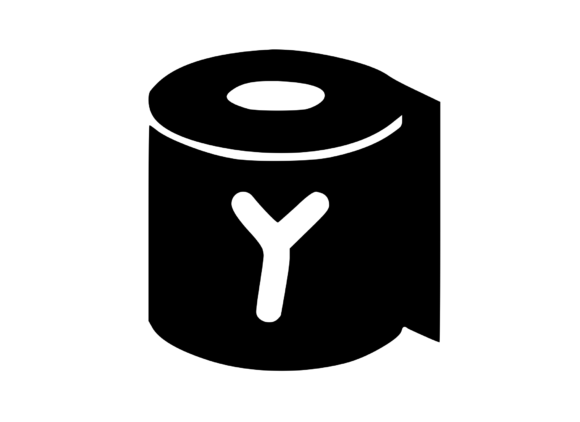
Toilet Paper Roll with Playful Mono Y: Design Review
When evaluating graphics for embroidery, the transition from a digital screen to physical thread is where many designs fail. As a designer who regularly tests assets for commercial and personal projects, I approached the Toilet Paper Roll with Playful Mono Y with a critical eye. This isn't just about whether the SVG looks cute in a browser; it is about whether this machine embroidery design will hold up on fabric, maintain its charm after washing, and ultimately sell as a finished product. In the world of Crafts and Graphics, novelty items walk a fine line between humorous and tacky. My assessment focuses on how this specific design balances playful aesthetics with technical stitchability for real-world application.
First Impressions and Visual Personality
My initial reaction to the Toilet Paper Roll with Playful Mono Y was that it possesses a distinct retro-modern vibe. The monogram style suggests a vintage bathroom aesthetic or a quirky housewarming theme rather than crude humor. For an Etsy seller or small shop product creator, this distinction is vital. It feels appropriate for a boutique setting rather than a gag gift store. The lines appear clean enough to translate well into embroidery, but the "playful" aspect implies curves and personality that require careful digitizing consideration.
As a digital embroidery file, the artwork has strong potential for custom apparel and home decor. However, because toilet paper is inherently white and cylindrical, the design relies heavily on outline definition and shading to prevent it from looking like a blank white blob on light fabrics. When reviewing this asset, I immediately considered how the negative space would function. Does the design utilize applique design techniques to save stitch count and add texture, or is it entirely composed of fill stitch and satin stitch? This determination dictates which fabrics will work best and what price point you can justify for the finished product.
Real-World Application: The Tea Towel Test
To truly evaluate this graphic, I mentally placed it in a specific scenario: creating a personalized kitchen tea towel as a holiday embroidery gift or a quirky wedding present. Kitchen towels are high-use items that face frequent washing, heat, and friction. This makes them the ultimate stress test for any embroidery project.
In this context, the Toilet Paper Roll with Playful Mono Y serves as a conversation starter. However, practical execution matters more than the concept. If I were stitching this onto a flour sack towel, I would need to ensure the stitch density isn't so heavy that it distorts the lightweight fabric. A dense block of stitches representing the roll could cause puckering that no amount of pressing can fix. Conversely, if the design is too sparse, the fabric texture might show through excessively, making the embroidered patch look unfinished. For a handmade product intended for sale, finding that balance ensures customer trust and reduces return rates due to poor quality perception.
I also considered this design for sweatshirt embroidery. On fleece or French terry, the softness of the fabric complements the humorous nature of the graphic. Here, the challenge shifts to stabilization. Fleece is stretchy and unstable. Using the correct stabilizer is non-negotiable to prevent the playful mono Y from shifting or sinking into the pile. If the registration is off, the whimsical charm instantly becomes a production error.
Technical Considerations and Fabric Limitations
Not every surface is suitable for this specific graphic. Through experience, I have identified several scenarios where caution is required when using the Toilet Paper Roll with Playful Mono Y:
- Curved Surfaces: Stitching this on caps or curved bags can be risky. The cylindrical shape of the toilet paper roll may distort visually when wrapped around a 3D object. Always test on a similar curved surface before committing to bulk production.
- Dark Fabrics: Since the subject matter is white, placing this on black or navy requires significant underlay or a white base layer. Without it, the dark fabric will bleed through, muddying the design. Check your thread colors and contrast ratios carefully.
- Stretchy Knits: For baby embroidery or onesies, the design size must be scaled appropriately. Large, dense designs on small, stretchy garments can make the fabric stiff and uncomfortable. Ensure the hoop size allows for adequate margin without stretching the knit out of shape.
- Textured Materials: Highly textured fabrics like terry cloth or boucle can swallow fine details. If the Mono Y includes delicate serifs or thin connecting lines, they may disappear. A running stitch outline or a topping stabilizer may be necessary to keep details crisp.
Impact on Product Value and Brand Perception
How does this design affect your bottom line? For creative entrepreneurs, uniqueness drives sales. The Toilet Paper Roll with Playful Mono Y offers a niche appeal that generic florals or standard monograms cannot match. It signals that your brand has personality and isn't afraid to be different. This can increase buyer engagement, especially for personalized gift shoppers looking for something memorable.
However, professionalism remains paramount. Even humorous designs must be executed with precision. Sloppy edges, thread breaks, or poor color choices will devalue the item regardless of how clever the concept is. When listing this as a tote bag design or commercial embroidery asset, your presentation matters. Use high-quality printable mockup templates to show clients exactly how the design sits on the product. Accurate representation builds confidence. If you are selling the design assets themselves, provide clear notes on recommended fabrics and stabilizers to help other makers succeed.
Essential Designer Notes Before You Stitch
Before loading this file into your machine or listing it in your shop, adhere to these professional best practices:
- Verify Licensing: Confirm whether your purchase includes commercial rights for selling physical goods or digital files. Never assume usage terms.
- Test Stitch First: Always run a sample on scrap fabric similar to your final project. Inspect the stitch density and registration.
- Check File Compatibility: Ensure the format matches your machine. While often sold as SVG for cutting machines, verify you have the proper embroidery format (PES, DST, JEF, etc.) for stitching.
- Evaluate Scale: Resize within reason. Drastically enlarging or reducing can alter stitch properties. Re-digitize if extreme resizing is needed.
- Mockup in Black and White: View the design without color to check value contrast. This reveals if the design reads clearly without relying solely on hue differences.
- Stabilizer Selection: Match stabilizer weight to fabric weight. Cut-away for knits, tear-away for wovens, and water-soluble toppings for high-pile fabrics.
The Toilet Paper Roll with Playful Mono Y is a charming addition to any crafter's library, provided it is treated with technical respect. By understanding its behavior across different substrates and applications, you can transform a simple graphic into a standout embroidered patch, apparel accent, or home decor piece that delights customers and showcases your skill. Whether you are an established apparel decorator or a hobbyist exploring new themes, success lies in the details of execution.